
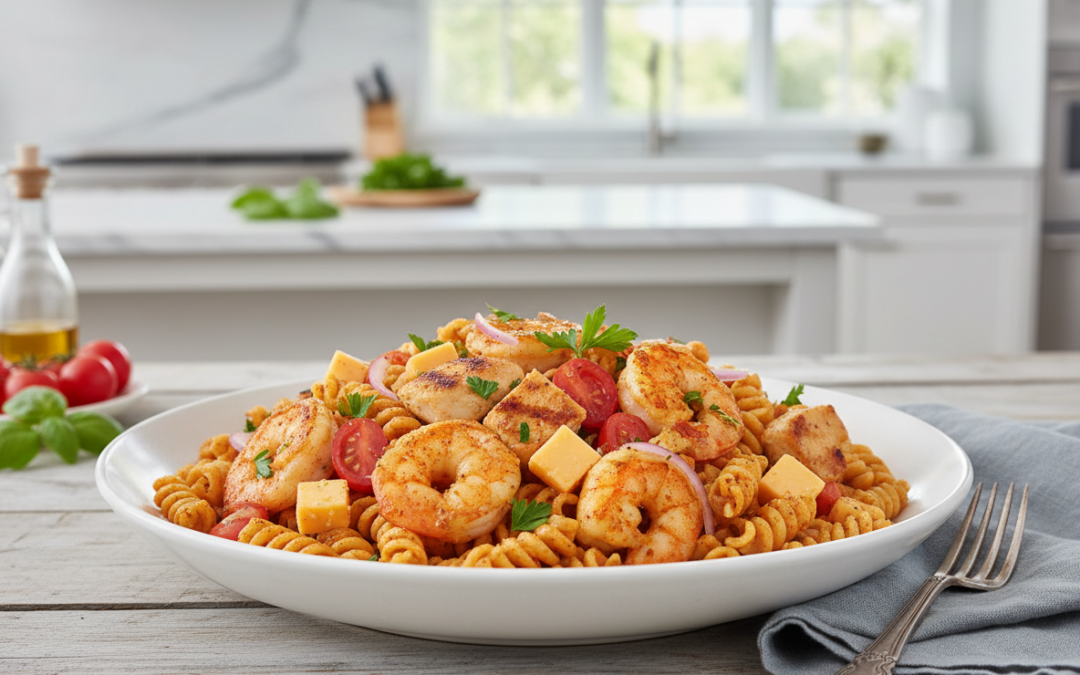
Most pasta salads are built to sit on the side.
They show up at the table, behave themselves, and quietly support something else. There is nothing wrong with that. But there is nothing memorable about it either.
This one is different.
This Shrimp and Chicken Pasta Salad is not leafy. It is not overloaded with dressing. And it is definitely not an afterthought assembled once everything else is finished.
Because when prawns are seared properly and chicken is cooked with intention, this stops being a side dish. It becomes structured. Balanced. Composed.
The difference is not in the ingredients.
The difference is in how heat is used.
What This Article Covers
-
Why most pasta salads lose texture before serving
-
Why prawns need short, confident heat
-
Why browning chicken changes flavour completely
-
How al dente pasta protects structure
-
How controlled heat turns a pasta salad into a complete meal
Pasta Salad Has a Reputation Problem
Pasta salad became popular because it was practical. In mid-century home kitchens, especially across Europe and America, cold pasta salads were designed for gatherings. They could be made ahead of time. They travelled well. They fed many people without last-minute pressure.
However, convenience slowly replaced intention.
Soft pasta. Bottled dressing. Protein that was boiled rather than browned. Over time, pasta salad became predictable.
The idea was never the problem.
Execution was.
Why Texture Defines Shrimp and Chicken Pasta Salad
If a pasta salad feels heavy, texture was usually lost early.
Overcooked pasta absorbs dressing too quickly and continues softening as it sits. By the time it is served, it has no resistance left. The structure collapses.
Cooking pasta al dente changes the entire experience. That slight firmness protects the final structure of your Shrimp and Chicken Pasta Salad. It allows the pasta to carry flavour without surrendering to it.
Structure starts in the pot.
How to Cook Prawns Properly for a Pasta Salad
Prawns do not reward hesitation.
Many people lower the heat when cooking seafood, assuming gentleness equals care. It does not.
Prawns cook quickly. Often three minutes is enough. When heat is too low, they release moisture and steam instead of searing. The result is rubbery rather than tender.
High, controlled heat creates quick browning on the outside while keeping the centre soft. This is where flat, even contact heat matters.
Cooking prawns on a teppanyaki surface allows full contact without overcrowding or pooling oil. The heat distributes evenly, helping them caramelise quickly while retaining tenderness. If you want that level of surface control, you can explore the La Germania Teppanyaki Stainless Steel Grill Plate here:
https://lagermania.co.za/store/teppanyaki-stainless-steel-grill-plate/
Short heat. Immediate removal.
That precision transforms a basic Shrimp and Chicken Pasta Salad into something structured.
Why Browning Chicken Matters
There is a difference between cooked through and properly cooked.
When chicken cubes are placed onto a hot, flat surface and left undisturbed long enough to brown, they develop depth. Colour equals flavour. Those golden edges bring contrast to the Shrimp and Chicken Pasta Salad.
Without browning, the chicken disappears into the pasta.
With browning, it becomes a feature.
This is the moment where a salad begins to feel like a complete meal.
Warm Protein Changes Everything
Traditional pasta salads are assembled completely cold.
This one is not.
When warm shrimp and chicken are folded into freshly drained pasta, the residual heat gently opens the dressing and slightly softens the cheese. Flavours integrate naturally without drowning the dish in sauce.
Temperature layering creates balance.
That is what shifts this from a side dish to a composed plate.
Shrimp and Chicken Pasta Salad
By Andiswa Zondi
Serves 6
Ingredients
-
2 chicken breasts
-
150 g prawns, peeled and thawed
-
200 g pasta screws
-
50 g cherry tomatoes, quartered
-
100 g cheddar cheese, cubed
-
50 ml salad dressing
-
15 ml Cajun seasoning
-
30 ml canola oil
Method
-
Boil the pasta in salted water until al dente. Drain and set aside.
-
Chop the chicken and prawns into even-sized cubes. Keep them separate.
-
Season both with Cajun seasoning and coat lightly with oil.
-
Cook the prawns over high heat for about 3 minutes, turning once. Remove immediately and set aside.
-
Cook the chicken until golden and cooked through, allowing proper browning before stirring.
-
Combine pasta, prawns, chicken, tomatoes and cheese in a large bowl.
-
Add dressing and toss gently until evenly coated.
This recipe works because of timing. Because of heat. Because of restraint.
If you would like to see exactly how Andiswa controls the sear, builds texture and brings everything together step by step, watch the full video here:
[Insert YouTube link]
It Stops Being a Side Dish
A well-made Shrimp and Chicken Pasta Salad does not sit politely next to something else. It holds its own.
The prawns resist slightly before giving way.
The chicken carries depth from proper browning.
The pasta holds its shape instead of turning soft.
Nothing about the ingredient list changed.
Only the way heat was used.
And that is what makes this pasta salad something entirely different from what you expected.