
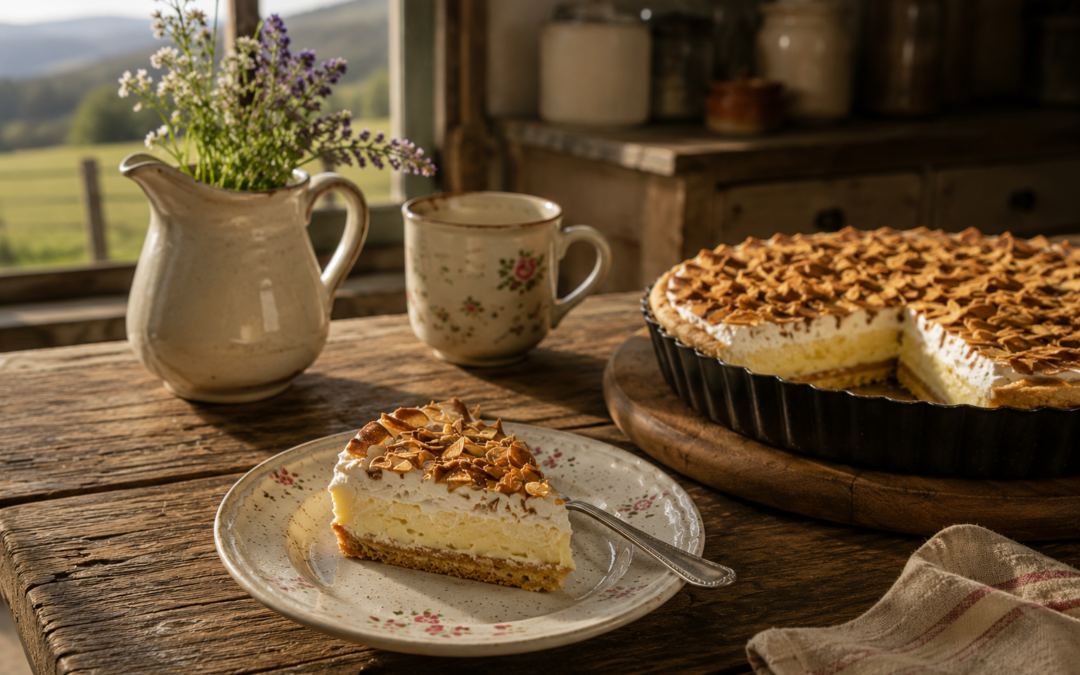
There are few kitchen moments more comforting than a warm milk tart coming out of the oven, its custard softly set and the scent of vanilla, cinnamon, toasted almonds and honey moving through the house. This bee sting milk tart recipe takes the familiar South African dessert many of us grew up with and gives it a golden finish: a lightly caramelised almond topping inspired by classic bee sting cake.
Underneath that topping, it remains unmistakably melktert. The pastry is crisp but tender, the milk filling is smooth and gently spiced, and the sweetness is restrained enough to let the custard remain the heart of the tart. It is the kind of bake that belongs beside a pot of tea, after Sunday lunch or at the centre of a family table where someone will inevitably ask for another slice.
Milk tart has been adopted and adapted across generations and South African communities, becoming part of the way we remember, celebrate and share food. This version respects that heritage while showing how careful heat control on the hob and in the oven can make a familiar recipe feel especially memorable.
In this article, we explore
-
Why milk tart holds such a fond place in South African food culture
-
How honey and almonds add texture without overpowering the custard
-
Why gentle hob heat matters when preparing the filling
-
How steady oven heat helps the pastry colour and the custard set
-
The signs that tell you when a baked milk tart is ready
-
How to serve the tart slightly warm without cutting it too soon
Why Milk Tart Feels So Proudly South African
Milk tart, or melktert, is one of those dishes that rarely needs an introduction in a South African home. It appears at church bazaars, family celebrations, school fêtes, bakeries, padstals and quiet afternoon teas.
Some versions use puff pastry, while others have a shortcrust shell. Family recipes also differ on whether the filling should be cooked on the hob, baked in the oven or prepared using a combination of both.
That ability to change while remaining recognisable is part of its staying power. University of Pretoria research into the origins and originality of South African milk tart describes melktert as a food shaped by different cultural influences before becoming part of South African heritage.
This bee sting milk tart recipe continues that habit of gentle adaptation. It keeps the soft milk custard, pastry and cinnamon we expect, then adds a glossy layer of honey and sliced almonds for warmth, crunch and a little celebration.
What Makes This a Bee Sting Milk Tart?
Bee sting cake is known for the contrast between a soft interior and a caramelised almond topping. Here, that idea is borrowed rather than copied exactly.
Honey, butter and cream are warmed together on the hob before sliced almonds are stirred through. The mixture is spooned over the partially set milk tart and returned to the oven, where the almonds toast and the honey develops a deeper flavour.
The topping should not become a hard sheet of brittle. It should remain delicate enough to cut with the tart, adding a light crunch against the creamy filling underneath.
The result is still a South African milk tart recipe at heart. The bee sting element is the sweet surprise, not a replacement for the character of the original.
Why This Bee Sting Milk Tart Recipe Uses Both the Hob and Oven
A baked milk tart begins before the tart enters the oven.
The custard is first thickened gently on the hob. This gives you more control over its texture and reduces the amount of time the filled tart needs to bake. The milk must be warmed without boiling, while the egg and cornflour mixture needs continuous stirring once it returns to the saucepan.
The oven then dries and colours the pastry, sets the custard and toasts the honey-almond topping. Reliable temperature control matters because the pastry needs enough heat to remain crisp, while the custard needs a gentler finish.
A La Germania cooker brings both stages into one practical cooking space, allowing the custard to be prepared on the hob before the tart is transferred to the oven for its controlled final bake.
For more ways to work with heat, timing and different cooking zones, explore these restaurant-quality cooking techniques for the home kitchen.
Can You Serve Milk Tart Warm?
Yes, but “warm from the oven” should not mean cutting it immediately.
Custard continues setting as it cools. If the tart is sliced as soon as it leaves the oven, the filling is likely to slump and the hot honey topping may pull away from the surface.
Leave it to rest for at least 45 minutes before serving it slightly warm. At that point, the filling will still be softer than a fully chilled milk tart, but the vanilla, cinnamon, honey and toasted almonds will be particularly aromatic.
For firm, neat slices, cool the tart completely and refrigerate it before cutting. For a relaxed family dessert, allow it to settle properly and serve while it still carries a little warmth from the oven.
Bee Sting Milk Tart Recipe
Preparation time: 30 minutes
Pastry chilling time: 30 minutes
Baking time: Approximately 40 minutes
Resting time: At least 45 minutes
Serves: 8–10
Equipment: 23 cm tart tin, saucepan, mixing bowls, whisk, fine sieve, baking paper and baking beans or dry rice
This bee sting milk tart recipe is designed to give the pastry, custard and almond topping enough time to develop without making the method unnecessarily complicated.
Ingredients
Pastry Base
-
1½ cups all-purpose flour
-
½ cup butter, softened but not melted
-
¼ cup sugar
-
Pinch of salt
-
1 egg yolk
-
1–2 teaspoons cold water, if needed
Milk Tart Filling
-
2 cups full-cream milk
-
½ cup sugar
-
3 tablespoons cornflour
-
2 large eggs
-
1 teaspoon vanilla extract
-
¼ cup cream
-
½ teaspoon ground cinnamon, plus extra for finishing
Honey-Almond Topping
-
½ cup sliced almonds
-
¼ cup honey
-
2 tablespoons butter
-
2 tablespoons cream
-
Small pinch of salt
How to Make This Bee Sting Milk Tart Recipe
1. Prepare the Pastry
Place the flour, sugar and salt in a mixing bowl. Add the softened butter and rub it into the dry ingredients until the mixture resembles fine breadcrumbs.
Add the egg yolk and bring the dough together gently. If it remains too dry to hold, add cold water one teaspoon at a time. Avoid kneading, as too much handling can make the pastry tough.
Roll out the pastry and use it to line a 23 cm tart tin. Trim the edges, prick the base lightly with a fork and chill for 30 minutes. This helps the pastry firm up and reduces shrinkage in the oven.
2. Blind-Bake the Tart Shell
Preheat the oven to 180°C conventional or 170°C fan-assisted.
Line the chilled pastry with baking paper and add baking beans or dry rice. Bake for 15 minutes.
Carefully remove the paper and weights, then return the shell to the oven for another 5–7 minutes, or until the base looks dry and is just beginning to turn golden.
Do not bake it until deeply browned because the pastry will return to the oven once the filling has been added.
Set the shell aside and reduce the oven temperature to 170°C conventional or 160°C fan-assisted.
A dependable oven shelf and correctly sized bakeware make hot pastry easier to handle. La Germania owners can also explore practical stove and oven accessories chosen for different styles of home cooking and baking.
3. Prepare the Smooth Milk Tart Filling
Pour the milk into a saucepan and warm it over medium-low heat until steaming. Do not allow it to boil.
In a separate bowl, whisk the sugar, cornflour, eggs and cinnamon until smooth.
Pour a small amount of warm milk into the egg mixture while whisking continuously. Gradually add the remaining milk. This raises the temperature of the eggs slowly and helps prevent small pieces of cooked egg from forming in the custard.
Return the mixture to the saucepan. Cook over low heat, stirring constantly and reaching into the bottom corners of the pan, where custard is most likely to catch.
When the custard is thick enough to coat the back of a spoon but remains pourable, remove it from the heat. Stir in the vanilla and cream.
For an especially smooth result, strain the custard through a fine sieve before adding it to the pastry shell.
4. Partially Set the Custard
Pour the warm filling into the pastry shell and smooth the top.
Bake for 12–15 minutes. The outer edge should begin to set while the centre remains soft.
This creates a more stable surface for the almond topping and helps prevent the nuts from sinking too deeply into the filling.
5. Make the Honey-Almond Topping
Place the honey, butter, cream and salt in a small saucepan.
Warm the mixture over low heat until the butter melts and the ingredients combine. Stir in the sliced almonds and cook gently for about one minute.
The topping should be glossy and loose enough to spoon. Do not brown it on the hob because the honey and almonds will continue colouring in the oven.
6. Add the Sweet Surprise
Carefully remove the tart from the oven.
Spoon the honey-almond mixture over the partially set custard and spread it gently across the surface. Avoid pressing the almonds into the filling.
Return the tart to the oven and bake for another 12–15 minutes.
The bee sting milk tart recipe is ready when the almonds are golden, the filling is set around the edges and the centre still has a slight wobble when the tin is moved.
The centre should not look liquid, but it should not be completely rigid. Residual heat will continue setting the custard after the tart leaves the oven.
If the almonds are colouring too quickly, loosely cover the tart with foil for the final few minutes.
7. Rest Before Serving
Place the tart on a cooling rack and leave it untouched for at least 45 minutes.
Dust lightly with cinnamon before serving. Enjoy it slightly warm for the full aroma of the vanilla and honey, or cool and refrigerate it if you prefer firmer slices.
Tips for a Better Bee Sting Milk Tart Recipe
Keep the Hob Heat Low
Custard rewards patience. Low heat allows the cornflour to thicken the filling while lowering the risk of the eggs cooking too quickly and producing a grainy texture.
Temper the Eggs Gradually
Add the warm milk slowly while whisking. Pouring it in all at once can raise the temperature of the eggs too quickly.
Blind-Bake the Pastry
Partially baking the shell before adding the filling helps the base remain crisp rather than pale and damp.
Reduce the Oven Temperature
The empty pastry shell needs slightly stronger heat to begin setting its structure. Once the custard has been added, a gentler oven temperature helps the filling set without becoming rubbery or split.
Watch the Topping, Not Only the Timer
Honey and thinly sliced almonds can colour quickly. Check the tart during its final bake and remove it when the topping is golden rather than dark brown.
Respect the Resting Time
The custard continues setting from residual heat after it leaves the oven. Resting is part of the method, not an optional delay.
How to Store This Bee Sting Milk Tart Recipe
Because this tart contains milk, cream and eggs, allow it to cool and then refrigerate it within two hours. Cover it well so the custard does not absorb other aromas from the refrigerator.
Official cold food storage guidance recommends keeping baked custard pies refrigerated and using them within three to four days.
For the best pastry texture, this tart is particularly good within the first two days.
Serve it chilled or allow an individual slice to stand briefly at room temperature before eating. Avoid reheating the whole tart, as this can overcook the custard and soften the pastry.
Frequently Asked Questions
What Is Bee Sting Milk Tart?
Bee sting milk tart is a South African milk tart finished with honey, butter, cream and sliced almonds. The custard remains soft and familiar, while the topping adds a lightly caramelised flavour and gentle crunch.
Is This a Traditional Milk Tart Recipe?
The milk custard, pastry and cinnamon use familiar melktert flavours. The honey-almond topping is a modern addition inspired by bee sting cake, making this a respectful variation rather than a strictly traditional recipe.
Why Did My Milk Tart Filling Become Lumpy?
The heat may have been too high, the filling may not have been stirred continuously or the warm milk may have been added to the eggs too quickly.
Use low heat, whisk while tempering and strain the custard before filling the pastry shell.
Why Is the Centre Still Soft?
A slight wobble is expected when the tart leaves the oven. The custard continues setting as it cools.
If the centre looks liquid rather than gently wobbly, return the tart to the oven for a few more minutes and check it again.
Can I Make This Bee Sting Milk Tart Recipe Ahead?
Yes. Bake the tart the day before, cool it completely and refrigerate it covered.
Remove it shortly before serving so the custard loses some of its refrigerator chill and the flavours become more noticeable.
Can I Use Ready-Made Pastry?
Yes. A good-quality ready-made shortcrust pastry can save time.
Line the tart tin, chill the pastry and blind-bake it as directed before adding the custard.
A Proudly South African Favourite, Finished With Care
The pleasure of this bee sting milk tart recipe lies in the balance between memory and surprise.
The first bite is familiar: tender pastry, milky custard, vanilla and cinnamon. Then the toasted almonds and honey arrive, bringing a little crunch and warmth without taking the dessert somewhere it does not belong.
It is still the milk tart we know. It simply feels dressed for the occasion.
Gentle hob heat creates the smooth filling, while steady oven heat sets the custard and gives the almond topping its golden finish. That relationship between technique and appliance is what turns a list of ingredients into a bake you will want to place proudly on the table.
Explore the La Germania appliance range for cookers designed to support everything from gently thickened custards to golden South African bakes.
Looking for another local favourite? Try this boerewors and apricot chutney sausage roll recipe for a savoury South African bake made for sharing.